November 16, 2026
Why Two T-Shirts in the Same Size Fit Completely Differently
A Medium Is Not a Measurement
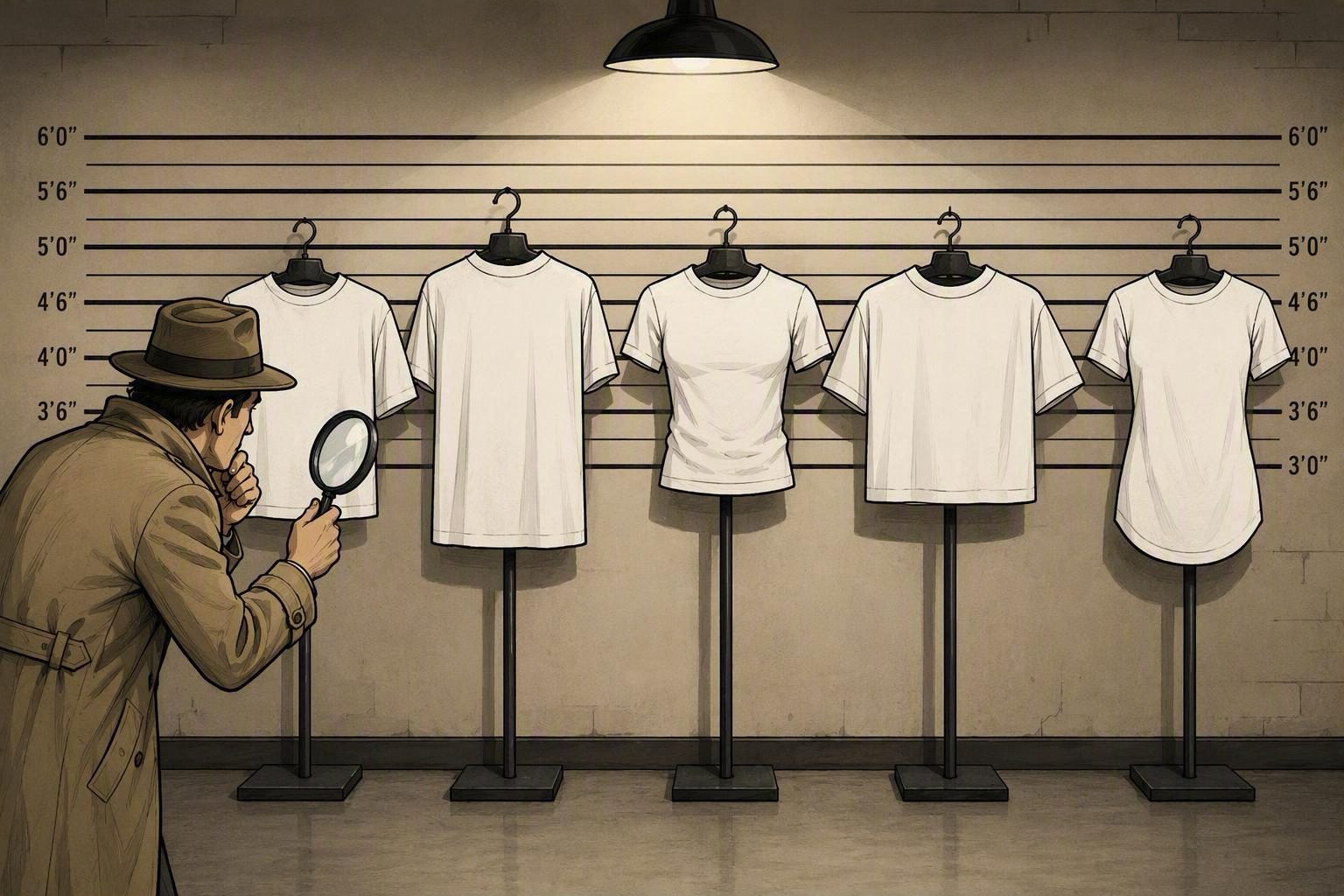
A size label looks precise because it is printed clearly and presented without qualification. Medium appears to be a defined measurement, but it is simply a position within one brand’s sizing system.
A medium generally means larger than that company’s small and smaller than its large. It does not guarantee a universal chest width, shoulder measurement, body length, or sleeve opening. Two shirts carrying the same label can feel designed for different people because, in many cases, they were.
Every Brand Starts With a Different Body
Companies develop patterns around fit models, measurement standards, and intended customers. One may design around a lean torso with narrow sleeves. Another may allow more room through the chest and waist. A third may begin with broader shoulders and greater body length.
Terms such as regular, modern, classic, athletic, and slim are not standardized. A modern fit from one company may resemble another company’s slim fit. The label tells you where the shirt sits within the brand’s range. The pattern tells you who the brand imagined wearing it.
Pattern Determines Proportion
A T-shirt pattern controls relationships among dimensions. Shoulder width determines where the sleeves begin. Armhole shape affects movement. Chest and hem measurements determine whether the body tapers, falls straight, or widens toward the bottom.
Two mediums can share a similar chest measurement while differing significantly in length, sleeve opening, or shoulder width. This is why pit-to-pit is useful but incomplete. Fit is created by the relationship among measurements, not one number in isolation.
Garment Measurements Are More Useful
The best reference is often a T-shirt you already enjoy. Lay it flat without stretching and measure the chest from pit to pit, shoulders between seams, body from the high shoulder point to the hem, and the sleeve from its starting point to the edge. Sleeve opening and hem width can help when comparing silhouettes.
These numbers are a personal reference, not a universal rule. They provide evidence beyond the label and make online shopping less dependent on photographs or vague fit descriptions.
Fabric Changes How Measurements Feel
Even accurate measurements cannot explain the entire experience. A dense cotton jersey with limited stretch may feel smaller than its dimensions suggest. Lightweight jersey may conform more easily. Elastane can allow a closer cut to move and recover.
Drape also changes perception. A fluid material may fall around the torso while a firmer fabric stands away from it. Two shirts can share similar widths and still wear differently because the material changes how the pattern behaves.
Manufacturing Adds Variation
Clothing is produced within tolerances rather than laboratory-level perfection. Cutting, sewing, finishing, washing, and pressing can introduce small differences among garments of the same style and size.
Knit fabrics can shift during production, and different dyes or finishing processes may subtly affect how colors relax or feel. This helps explain why a repurchased favorite or a second color can occasionally fit a little differently.
Intended Silhouette Matters
A relaxed shirt is not simply a regular shirt made larger. Ideally, shoulders, sleeves, torso, and length are proportioned together. The same is true of trim, boxy, athletic, and oversized shirts.
A dropped shoulder may look wrong if you expect a conventional fit even when it is intentional. A shorter body may feel undersized when it was designed to balance a wider torso. The useful question is whether the proportions support the intended silhouette and whether that silhouette works for you.
Build a Personal Fit Reference
Instead of chasing one permanent size, understand the range of proportions you prefer. You may accept one chest width in structured cotton and a narrower one in stretch fabric, or prefer different lengths for layering and standalone wear.
The objective is not to prove that you are always a medium. It is to reduce blind experimentation by learning which measurements and materials repeatedly work.
The ThreadFits Take
Two T-shirts in the same size fit differently because the label does not define the garment. The pattern, fit model, silhouette, fabric, and manufacturing process do.
Size labels remain useful starting points. Garment measurements and fabric behavior provide a clearer picture of what will happen once the shirt is worn.